VOid Aesthetics
The economist Adam Tooze gave an interesting lecture in Berlin recently in which he contrasted the West’s preoccupation with a “new world order” with China’s approach to “world ordering”, arguing that American hegemony was built on a singular worldview asserted through international politics whereas China is more interested in a process of national development on the global scale. Perhaps, then, it is time to abandon the idea of a new global order altogether? Attempts to assert order over disorder, Tooze says, necessarily have an aesthetic quality. An ideological drive. Channelling his inner journalist, he upbraids us for believing in such easy narratives. “This is a moment not for soothing bedtime stories, but to summon our wits to survive”, he says. “It is as though we are living inside a nightmarish, resto-modded fairytale: we’ve been eaten by the big, bad wolf and we’re inside the stomach, waiting to know whether the huntsman will come to cut us out so that we can escape to freedom. And in that moment, we are dreaming about a new world order? It is escapism.” Tooze goes on to suggest that Western thinkers can learn a lot from their Chinese counterparts. Rather than seeking fixed structures, we must think about the continuous process of “world ordering”, of an increasingly interconnected and contested process by which we navigate the polycrisis. Debating a new world order today, he says, is a “vertiginous, bloody void.”
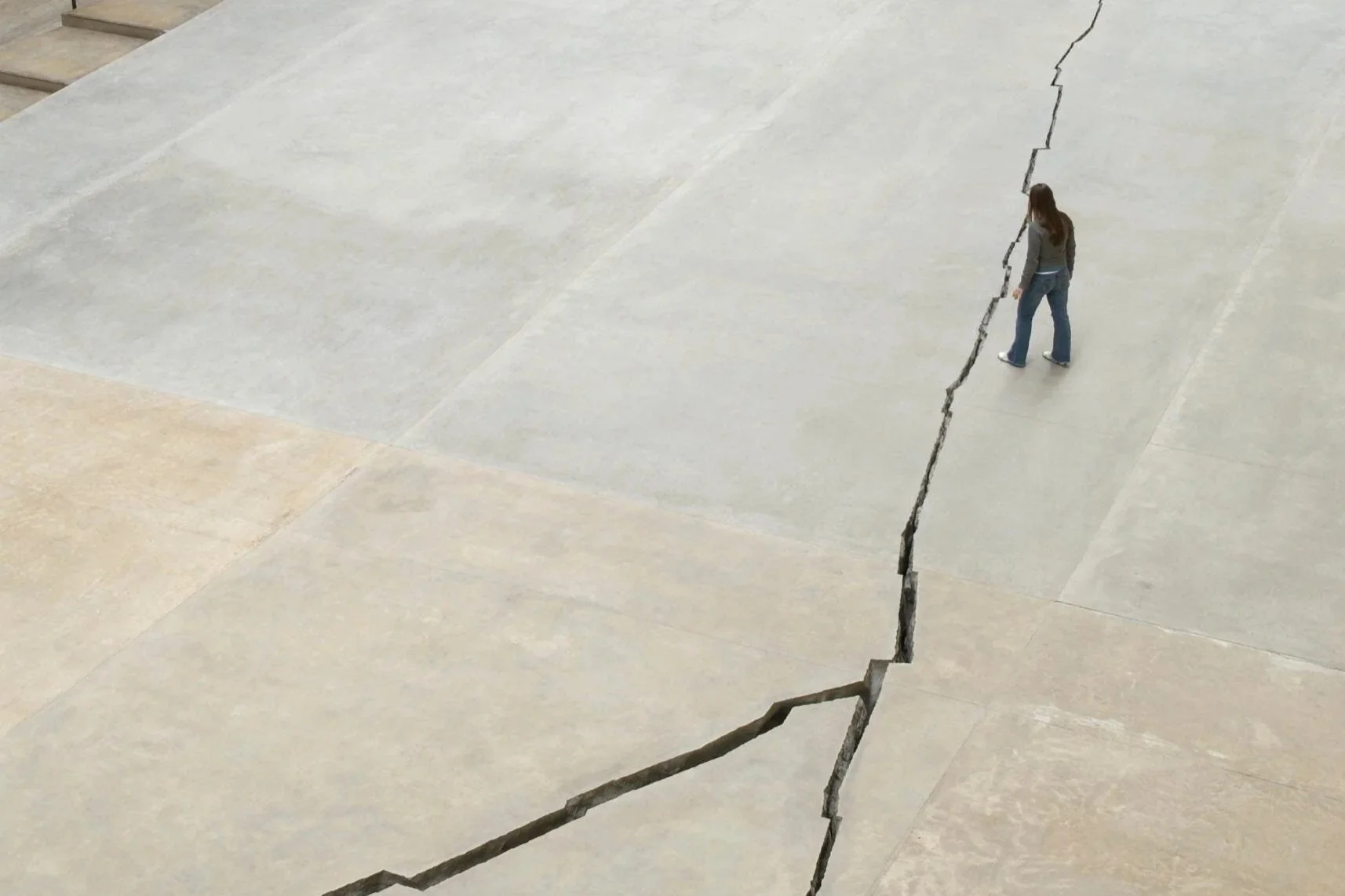
There is a lesson here for cultural theorists too. Attempts to define our era often fall flat. Whether in trying to sketch out a new aesthetic programme or to categorise the art of the twenty-first century, we are often left asking the same, frustrating questions: “What comes after postmodernism?”, “What is contemporary art?”, “How can we understand the present if we cannot ever describe it?” This is a question that the editors of the art magazine Frieze came up against last month when they asked two hundred art workers to elect the “most outstanding works of art from the past quarter century”. Their final list contains no art pieces after 2019. The editors point out that this omits the cultural significance of the pandemic, but I think other, equally important cultural moments are missing too: the climate strikes, the Black Lives Matter movement, the Palestinian genocide. One of the editors, Andrew Durbin identifies “a kind of nostalgia for the 2010s”; “these were the Obama years, the market was riding high, cash flowed, there was a different level of excitement.” It is of course unsurprising that this kind of exercise is shot through with American nostalgia, and yet beyond that there is little that unites the ensemble. Listicles are a doomed and hapless sport regardless, they seem to exist only to spark discourse. Perhaps that is why, flicking through these artworks, it is hard to get excited about the state of contemporary art. Many of these pieces were deeply political and socially transgressive in their time, but presented here they look staid and dull. They seem to speak to a different now. Everything falls, like Doris Salcedo’s Shibboleth, down a vertiginous void.
The editors of another art magazine E-flux have clearly picked up on the same discomfort. “What was contemporary art?” they asked last week, already writing its post-mortem. “The question, which has been nagging away at the back of everyone’s minds for years, has recently become impossible to ignore. Amid the art fairs of the fall, dominated this year by paintings stripped of all but the blandest political content, the unavoidable impression was that contemporary art’s demise is inseparable from the collapse of the social and economic infrastructures by which it has been supported since the middle of the twentieth century, and whose values it has reflected.” So, is contemporary art dead? And if so, what has replaced it? The editors of E-flux conclude that, if anything unites the overlapping projects of the last few years, then it is “the search for secure structures of meaning in a world that no longer makes much sense by the metrics established in modernity.” I wrote a similar thing in March this year: “Why are we all so caught up in attempts to define our era, and why does everything ultimately prove so unsatisfactory? Perhaps, after all is said and done, the most defining feature of our era will be our struggle to categorise it. Its disappointing incoherence.” It is worth pointing out, as Tooze does, how Western-centric this all is. Nobody in China is having an existential crisis because Trump is back in the White House or because Nigel Farage is topping the polls in Britain; ask them about Trump, and they will calmly mutter something about American decline and how irrelevant it all is. The West might be in freefall, but that does not particularly affect the worldview of an Indian business owner, a Thai rice farmer, a Sudanese child soldier. For some people, this era makes perfect sense; and for others, it never made much sense anyway.
Since the Frieze experiment suddenly cut off in 2019, let us take that as a convenient point of analysis. What happened in 2019? At the end of the year, a virus started to spread in Wuhan, China, that would result in millions of people around the world falling ill and dying – buildings were locked down, families were split up, and the only way we could communicate was through our screens. It was a peculiar time. A time of great pain, but also of great possibility. People had a chance to stop and to reflect, but they were also powerless to do anything about it. Afterwards, we were all encouraged to forget the pandemic had ever happened. “Go back to work, normality has resumed!” And yet, under the surface, everything had shifted. What was normal once was normal no longer. A profound sense of dislocation, of things being out of place, washed over us. Earlier that year, something else had happened that fed into this feeling. There had been huge climate protests around the world, spurred on by the extreme heat and a UN report on 1.5C warming. The world’s top scientists had now broken cover; they warned that keeping global warming below the critical threshold was technically still possible, but only if we saw “rapid, far-reaching and unprecedented changes in all aspects of society.” In other words, a revolution. Amid runaway inequality, escalating climate breakdown, and in the shadow of the pandemic, how could anyone pretend that the current system was working? An alternative was necessary. We needed real change – and that went for the art world too.
But then, in politics and in culture, nothing really happened. Galleries started to make fleeting reference to the climate crisis. A few artists claimed to have been inspired by Mother Earth. But, generally, a culture of silence dominated. I once asked a script reader from a London theatre what topics new writers were writing about. “The climate crisis”, he said immediately. “We get so many plays about climate change.” Then I asked him why no major theatres were programming these plays. “I don’t know”, he said. “It’s not what sells, I guess. And they’re usually pretty crap.” There are many reasons why new forms of cultural expression are being supressed by major institutions, but I think it is important to take his second claim seriously too. It is almost certainly true that writers, artists, and storytellers of all kinds have failed to create art that captures the urgency of the current moment, that is able to traverse the polycrisis and to stare deep into the void. As artists grapple with the scale of the crisis and the very real prospect of societal breakdown, what art has come from these deadly dynamics?
Instead of trying to locate a new regime in art, or a new world order in global politics, perhaps we should take Adam Tooze’s suggestion and look instead at “world ordering”. The polycrisis may not herald a brand new era. But the process by which breakdown happens might still throw up some illuminating new dynamics. In the twenty-first century, there have been three main responses to ecological breakdown: denial, radicalisation, and re-entrenchment. A serious engagement with art today might be less interested in specific events or themes, styles or trends, and might instead look at these overlapping and intersecting responses. The process of re-entrenchment which now dominates our politics is an extractive impulse, an intensification and re-iteration of the current system. There is nostalgia here for the old hegemon, a hyper exploitation of culture as product, and a repressive and violent system of ethics underpinning it all. Right now, this is the culture that reigns supreme. It manifests in endless remakes of old property, in the glorification of greed and violence, in the artist as celebrity, hustler, and entrepreneur. In art reduced to “content creation.” But there are other dynamics at play. Radicalisation brings stories of rupture, repair, and revolution; denial opens the door to conspiracy, fatalism, and escape. As the interplay of these assembled narratives shape and reorder culture, so too do they reorder the world. Ultimately then, our task is clear. The most important challenge is not to define the new world order, but to shape it.